If you’ve ever stared at a Nifty intraday chart, confused by the chaos of random candles, support lines, and fake breakouts — you’re not alone.
Most traders struggle with identifying true support and resistance levels. Some rely on guesswork, others on single indicators. But here’s the truth: the market rewards those who wait at the right levels — not just any level that looks like support or resistance.
And that’s exactly what this strategy solves.
Today, we’re stacking Woodie Pivot Points with Fibonacci Pivot Points to build powerful confluence zones — areas where high-probability intraday trades hide in plain sight.
Whether you’re trading Nifty, Bank Nifty, or even Bitcoin and Forex, this method works across instruments — because it’s rooted in price action and math-based symmetry.
🚦 Why Two Sets of Pivots Are Better Than One
Let’s start with a question: what’s more reliable — a single confirmation or two independent confirmations at the same level?
Exactly.
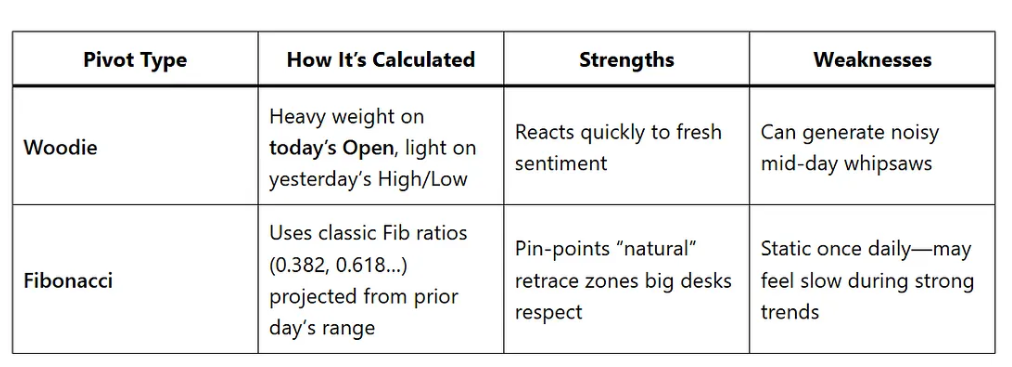
Woodie Pivot Points are dynamic and reactive — they prioritize recent price action (specifically, today’s open price).
Fibonacci Pivot Points offer structure based on mathematical ratios — they project symmetrical levels derived from the prior day’s high, low, and close.
By combining both, we build zones that act like magnets for price — places where smart money fights over control.
These are your high-conviction levels.
🧠 What is a Confluence Zone?
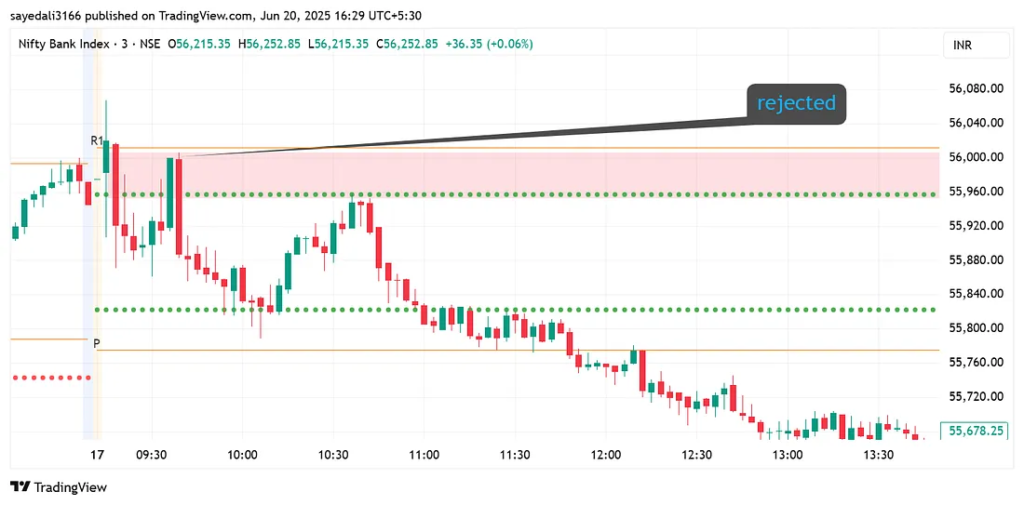
A confluence zone is a price region where multiple pivot levels from different systems (in our case, Woodie and Fib) overlap within a narrow band.
Think of it like this: if both systems scream “this is support,” you listen.
There are two types:
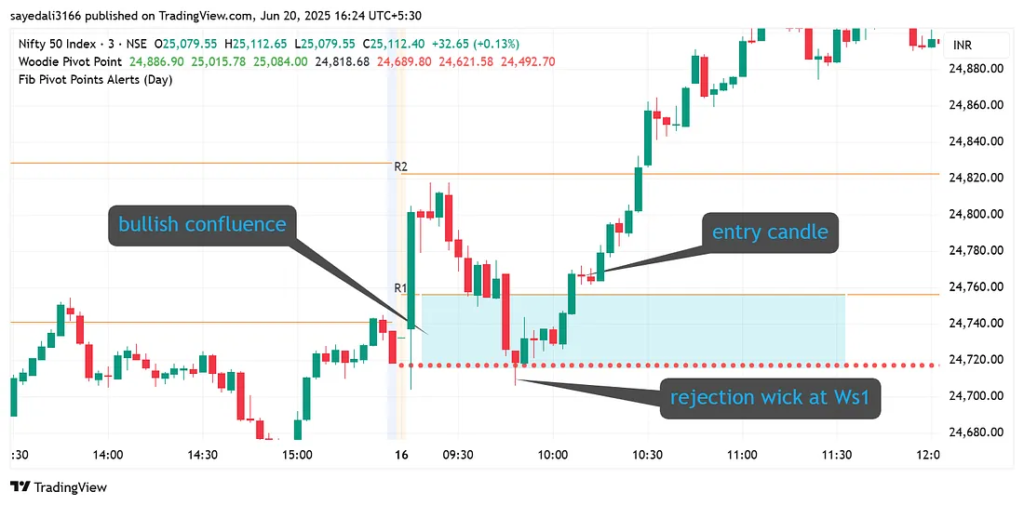
✅ Bullish Confluence Zone
A Woodie S1 or Pivot overlaps with a Fibonacci S1 or S2.
Overlap should fall within ±0.05% price range.
Highlight the zone in green.
❌ Bearish Confluence Zone
A Woodie R1 or Pivot overlaps with a Fibonacci R1 or R2.
Same ±0.05% tolerance.
Mark this with a red highlight.
📌 Pro Tip: The more levels that align, the stronger the “gravitational pull.” Price reacts more violently around these zones.
📊 Full Strategy Overview
📥 Buy Setup (Long Entry)
Price enters a Bullish Confluence Zone.
A candle shows rejection (like a long lower wick or bullish engulfing pattern).
The next candle closes green, at least 0.05% above the zone.
Volume on that candle is equal to or above the 20-bar average.
Enter a long trade at the open of the next candle.
Stop Loss = 0.15% below the lowest pivot in the confluence zone.
TP1 = Nearest upper Woodie level (Pivot or R1).
Once price moves 0.25%, move stop to breakeven.
TP2 = Overlapping Fib R2 / Woodie R2.
🚫 If price blasts through the zone without rejection, skip the trade. That’s institutional momentum overpowering technicals.
Below are my new ebooks.
🎯 Ready to Trade Like a Pro? Stop relying on noisy indicators and random signals. With “Advanced Candlesticks Indicators,” you’ll learn powerful, proven setups that actually work — even in volatile markets.
👉 Click “Buy Now” to unlock 7 battle-tested strategies, level up your TradingView game, and start spotting high-probability entries like a sniper.
💥 Don’t just trade. Trade with confidence. Trade with precision. Trade with purpose
If you’ve ever felt lost in the chaos of market moves, it’s time to bring structure to your strategy. My new ebook, CPR MASTER CLASS, breaks down one of the most powerful tools in price action trading — Central Pivot Range — and shows you exactly how to trade with confidence, clarity, and consistency.
✅ Learn CPR, Virgin CPR, Camarilla, Volume, VWAP, and more ✅ Includes real chart examples, setups, and TradingView guides ✅ Instant download, lifetime access
🚀 Ready to Supercharge Your Trading? 📈 If you’re tired of guesswork and want to trade confidently using advanced indicators that actually work, my ebook “Advanced Technical Indicators for Your Trading Journey” is exactly what you need!
BUY NOW 25 Intraday Trading Strategies in 2025. 🚀 Don’t miss this opportunity to supercharge your financial journey. Get both ebooks now on Gumroad and start building your path to success today!”‘ is packed with powerful, easy-to-follow setups designed to maximize your trading profits this year. From quick scalps to trend-following techniques, this book gives you the edge to crush the markets like a pro.
‘📗 ’15 Intraday Indicators’ — Master the most powerful technical indicators for precision trading. Learn how to spot high-probability setups, confirm trends, and optimize your entries and exits like a pro.
‘Stock Market for Beginners’ — Your ultimate guide to understanding the stock market from scratch! Learn essential terms, beginner-friendly strategies, and how to grow your wealth — no prior experience is needed
📤 Sell Setup (Short Entry)
Price touches a Bearish Confluence Zone.
Candlestick forms a bearish rejection signal (like an inverted hammer, Doji, or bearish engulfing).
Next candle closes red at least 0.05% below the zone.
Volume spikes above the 20-bar average.
Enter short at next candle’s open.
Stop Loss = 0.15% above the highest pivot in the zone.
TP1 = Next Woodie S1 or Pivot.
Move SL to breakeven after 0.25% move.
TP2 = Overlapping Fib S2 / Woodie S2.
🛠️ How to Add These Indicators in TradingView
Setting up the chart is easy:
Click Indicators on the top bar.
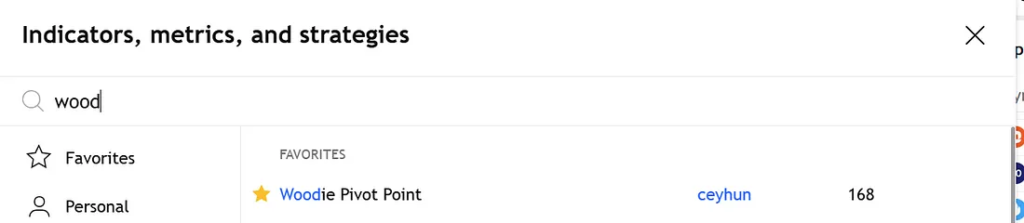
Search for “Pivot Points Standard”:
Change Type to Woodie
Timeframe = Daily
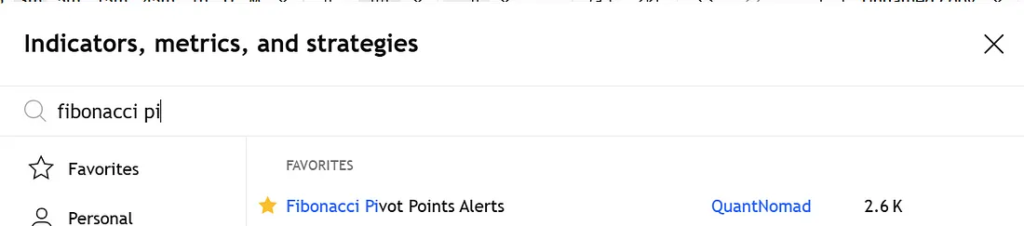
Then search “Fib Pivot Points Alerts (Day)” by “StockRanger” or similar:
Keep default Fib ratios: 0.382 / 0.618 / 1.000
Color code:
Woodie Pivots: bold and thick lines
Fibonacci Pivots: thin lines
This lets you visually spot confluence zones at a glance.
📈 Backtest Results (Nifty 3-Min Chart)
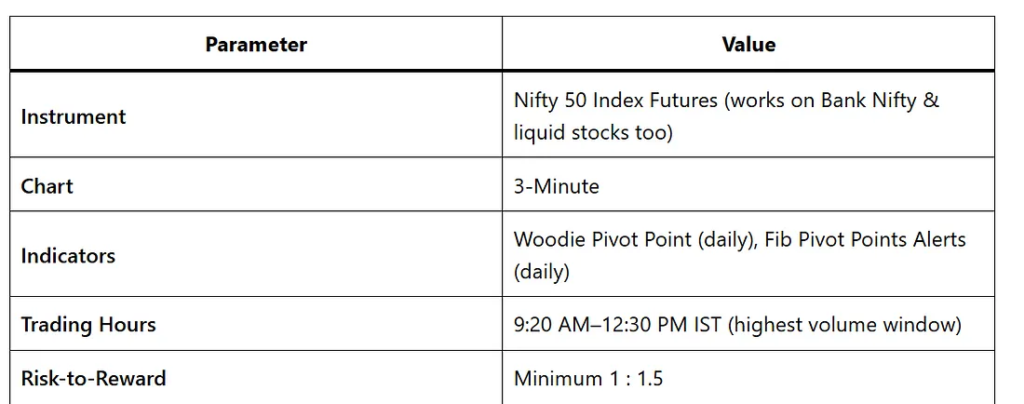
Here’s what you’ll notice when you backtest this on Nifty Futures or Options:
Success rate: ~68% with strong volume confirmation.
Best trades: Between 9:20 AM to 10:30 AM IST.
False breakouts: Reduced by 70–80% when both pivots align.
Average risk-reward: 1:1.8 (can reach 1:2.5 in trending days).
This is a game-changer if you’re tired of fakeouts and choppy markets.
📉 Risk Management Rules (Non-Negotiable)
No strategy works without discipline. Here are the rules:
Risk per trade: Max 2% of total capital.
Daily loss cap: Stop trading after 4% loss. No revenge trades.